
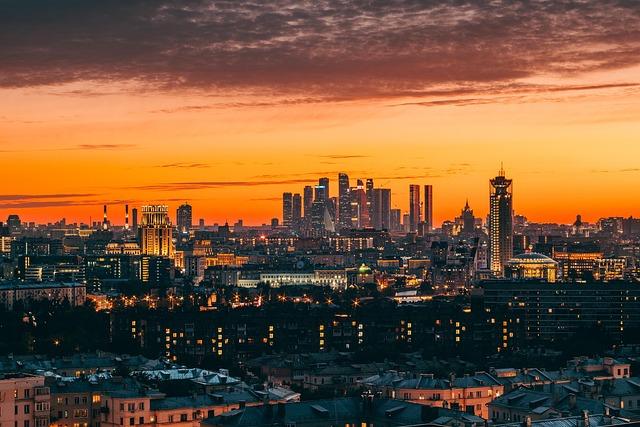
title: “Top 10 Skyscraper cities: A Global Race to the sky”
description: “Discover the cities leading the world in skyscraper construction. This article explores the top 10 cities with the most skyscrapers, offering insights into the architectural marvels and the reasons behind thier vertical expansions.”
Top 10 Skyscraper Cities: A Global Race to the sky
In an era where urban landscapes are constantly evolving, skyscrapers stand as monuments of modern engineering and architectural ambition. These towering structures are not just about height; they symbolize a city’s economic growth, technological advancement, and cultural significance. The race to build taller has led to a fascinating global competition, with cities vying for a spot in the list of the world’s most skyscraper-dense metropolises. This article delves into the top 10 cities with more skyscrapers than anywhere else in the world, offering a glimpse into where and why the world is building tall.
The Sky’s the Limit: Cities Leading the Vertical Race
1. Hong Kong
Hong Kong tops the list with its iconic skyline, featuring over 480 skyscrapers. The city’s dense population and limited land have spurred its vertical growth, making it a world leader in skyscraper construction.
2.New York City
The Big Apple is synonymous with skyscrapers. Home to the Empire State Building and the One World Trade Center, NYC has over 290 skyscrapers, making it a historical and contemporary architectural marvel.
3. Shanghai
China’s rapid urbanization is epitomized in shanghai’s skyline, boasting over 270 skyscrapers. The Shanghai Tower, China’s tallest building, reflects the city’s economic boom and futuristic vision.
4. dubai
Dubai’s ambitious skyline is crowned by the Burj Khalifa, the world’s tallest building. With over 200 skyscrapers, Dubai showcases the UAE’s oil wealth and its investment in becoming a global tourist and business hub.
5. Tokyo
Japan’s capital combines conventional architecture with modern skyscrapers,housing over 160 skyscrapers. Tokyo’s blend of the old and the new makes it a unique entry on this list.
6. Chicago
Known as the birthplace of the skyscraper, Chicago has over 130 skyscrapers. the Willis Tower and the neo-Gothic Tribune Tower highlight the city’s architectural innovation and history.
7. Shenzhen
A testament to China’s economic miracle, Shenzhen has transformed from a fishing village to a city with over 130 skyscrapers, including the Ping An Finance Centre, one of the world’s tallest buildings.
8. Guangzhou
Another Chinese city on the list, Guangzhou, features over 120 skyscrapers. The Canton Tower and the CTF Finance Centre are symbols of Guangzhou’s economic and cultural significance.
9. mumbai
India’s financial capital, Mumbai, is rapidly growing vertically, with over 100 skyscrapers. The city’s skyscrapers, like the Imperial Towers, reflect its economic aspirations and space constraints.
10. Seoul
South Korea’s capital rounds out the top 10 with over 100 skyscrapers. The Lotte World Tower, standing as the fifth tallest building in the world, epitomizes Seoul’s economic strength and technological prowess.
Why the World is Building Tall
The trend towards skyscraper construction is driven by several factors:
- Economic Growth: Skyscrapers are often seen as symbols of a city’s economic power and prosperity.
- Space Constraints: In densely populated cities, building upwards is a practical solution to the scarcity of land.
- Technological Advances: Innovations in construction and design have made it possible to build higher than ever before.
- Status and Prestige: Cities and corporations view skyscrapers as a means of showcasing their status on the global stage.
Beyond the Clouds: The impact of Skyscrapers
Skyscrapers do more than just redefine city skylines; they have a profound impact on urban life and the environment. They can enhance a city’s efficiency by centralizing resources and reducing commute times. However, they also pose challenges, such as the “urban heat island” effect and the need for enduring construction practices to mitigate their environmental footprint.
Conclusion
The global race to the sky is more than a competition for the tallest building; it’s a reflection of human ambition, technological progress, and urban evolution.The cities leading in skyscraper construction are not just creating impressive skylines but are also shaping the future of urban living. As we look up at these towering achievements, we’re reminded of the limitless potential of human creativity and ingenuity.
Whether you’re an architecture enthusiast,a traveler seeking the next urban adventure,or someone fascinated by the dynamics of urban progress,the world’s skyscraper cities offer endless opportunities for exploration and inspiration.As we continue to build towards the sky, one can only wonder what the future holds for our urban landscapes and how these vertical endeavors will continue to shape our world.
